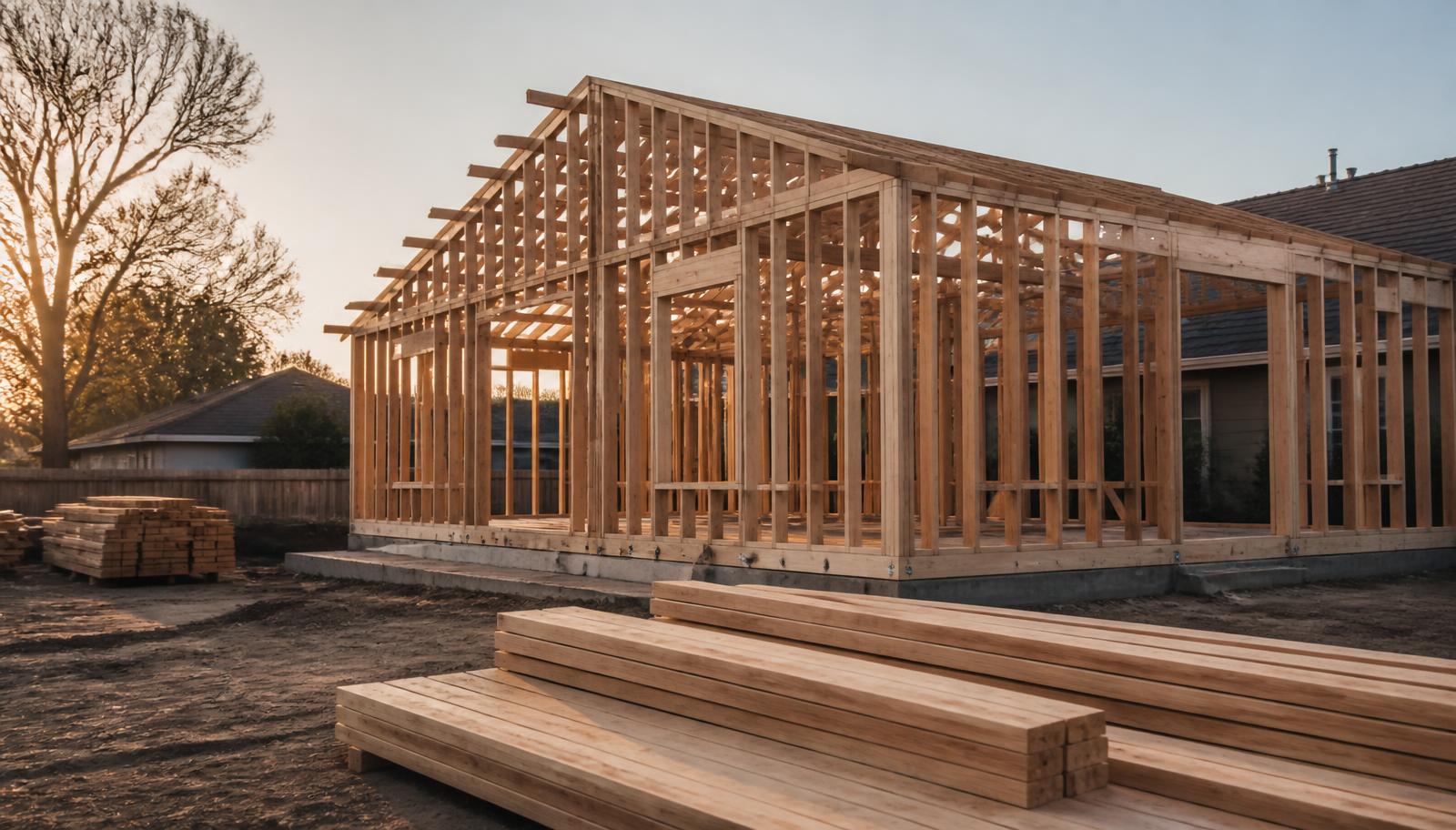
Replacement cost is the most reassuring phrase in a homeowner's policy and the least examined. It sounds like a promise to put the house back. It is closer to a promise to pay up to a specific number, calculated some time ago, using assumptions that may no longer describe your house or your market.
It is not market value, and it is not what you paid
Market value includes land, location, and what a buyer is willing to pay on a given afternoon. Replacement cost includes none of that. It is the cost to rebuild the structure: materials, labor, demolition and debris removal, permits, architectural work, and the contractor's overhead.
The two numbers routinely diverge in both directions. An older home in a desirable neighborhood can cost considerably more to rebuild than it would sell for, because the details that make it worth owning — plaster, millwork, masonry, true dimensional lumber — are expensive to reproduce. A newer home on valuable land can be the reverse.
How your number was probably set
Most dwelling limits originate in a valuation model: square footage, year built, roof type, a construction quality grade, and regional cost data. It is a reasonable estimate for a typical house. It handles unusual houses poorly.
The things models tend to miss are exactly the things people spend money on — a renovated kitchen, a finished lower level, custom cabinetry, stone or slate, structural changes, an addition. Then the limit is escalated by a small percentage each renewal, which is a reasonable proxy for inflation and a poor proxy for a construction market that has moved sharply.
A limit set eight years ago and escalated three percent a year has not kept pace with what a builder will quote today.
The two endorsements that do the real work
Extended replacement cost adds a cushion above the stated dwelling limit — commonly an additional percentage — that absorbs the difference when rebuilding costs come in higher than the policy assumed. Some carriers offer guaranteed replacement cost, which removes the ceiling entirely for qualifying homes. It is the strongest form available and it is not offered on every house.
Ordinance or law coverage handles a different problem. When a home is substantially damaged, the rebuild follows today's building code, not the code in force when the house was built. Electrical systems, egress, insulation, fire protection, stair geometry, elevation requirements — a permit office will require the current standard, and a policy without this endorsement pays to replace what was there rather than what is now required.
Two conditions that matter after a loss
First, replacement cost is generally paid in two stages. The initial payment reflects depreciated value; the remainder is released once the work is actually done. Understanding that sequence in advance prevents an unwelcome surprise about cash flow during a rebuild.
Second, many policies contain a coinsurance provision: insure the home below a specified percentage of its replacement cost and every claim — including small ones — is reduced proportionally. An underinsured house is not merely exposed to a total loss. It is exposed to a kitchen fire.
A short annual check
- What is the dwelling limit, and what cost per square foot does it assume?
- Have we renovated, added, or upgraded anything since that number was set?
- Does the policy include extended or guaranteed replacement cost, and at what percentage?
- Is ordinance or law coverage present, and is the amount meaningful for the age of the house?
- Does the additional living expense limit cover a realistic rebuild timeline in this market?
None of this requires a new policy. It requires someone to read the one you have against the house you actually own. If it has been a few years, we would be glad to take a look.
This article is general information, not advice about a specific policy or situation. Coverage terms, availability, and eligibility vary by carrier and by state, and every policy is governed by its own language. For guidance on your own coverage, talk with a licensed advisor.
All Insights